
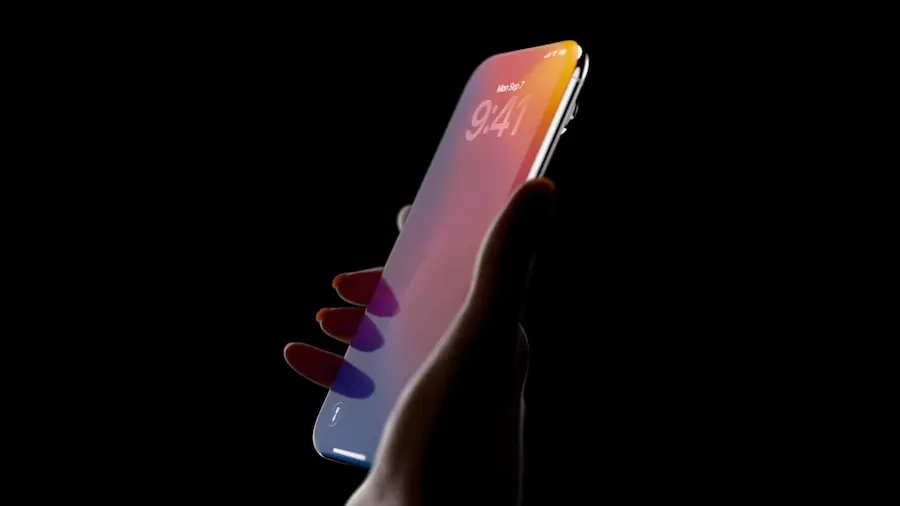

Apple is preparing an anniversary iPhone for 2027 that, if the leaks are on the right track, would not be just another annual update with a better chip and a more refined camera. The model that would mark 20 years of the iPhone is shaping up to be the most ambitious redesign since the iPhone X, the 2017 leap that removed the Home button and set the visual template for several generations that followed. The actual symbolic date falls on 29 June 2027, but everything suggests Apple would stick to its usual schedule and unveil it in the autumn, alongside other high-end models.
The big question starts with the name. Sources have provisionally referred to it as the iPhone 20 or iPhone XX, and there is even speculation that Apple could avoid the iPhone 19 name altogether, just as it once jumped from iPhone 8 to iPhone X. Beyond the marketing, the real story is in the hardware: an edge-to-edge curved display, a design with far more glass, Face ID under the panel if the technology is ready in time, new sensors, haptic buttons and a denser battery. Are we looking at another change of era, or an overly optimistic wish list?
A glass redesign with an almost bezel-free display
The most striking element would be a body with curved glass wrapping around the front and back, aiming for the effect of a continuous display with no visible cut-outs. According to the leaks, Apple is not pursuing an aggressive waterfall-style curve, but rather a four-edge solution with very subtle micro-curves, designed so side gestures still feel natural and content distortion is reduced. In less laboratory-like terms: more futuristic, but without making the panel feel like an awkward tech demo to use.
The display would also receive a major upgrade. Reports point to a Samsung-made panel using Color Filter on Encapsulation technology, which removes the polarising film and applies the colour filter directly to the encapsulation layer. This would allow for a thinner assembly, with greater light transmission, higher brightness and lower power consumption. Apple would also combine this panel with 16-nanometre display drivers and a crater-shaped light diffusion layer to even out brightness, including along the curved edges.
The goal of that engineering would be to get closer to a truly bezel-free front. One leak mentions 1.1 mm bezels, compared with roughly 1.44 mm on the iPhone 17 Pro. It is a small difference on paper, but in a premium phone every tenth of a millimetre counts, almost like when a manufacturer boasts about millimetres on an ultra-thin laptop and we all pretend we have not mentally pulled out a ruler.
Under-display Face ID, Apple’s own camera sensor and haptic buttons
Apple is also said to be working on hiding Face ID under the display using a micro-transparent glass window capable of letting infrared sensors work through the panel. However, this point should be treated with caution: while some sources describe it as a target, other analysts believe the technology may not be fully ready in 2027. In that scenario, the anniversary iPhone would keep a smaller Dynamic Island, similar to the one expected on the iPhone 18 Pro models.
In photography, the move would be especially interesting because Apple is reportedly developing its own stacked image sensor to replace the Sony sensors it currently uses in the iPhone. The prototype mentioned would use LOFIC technology, which allows each pixel to store different amounts of light, with a potential dynamic range of up to 20 stops. In everyday terms, the promise is better handling of scenes with bright highlights and deep shadows, exactly where computational processing usually has to work overtime.
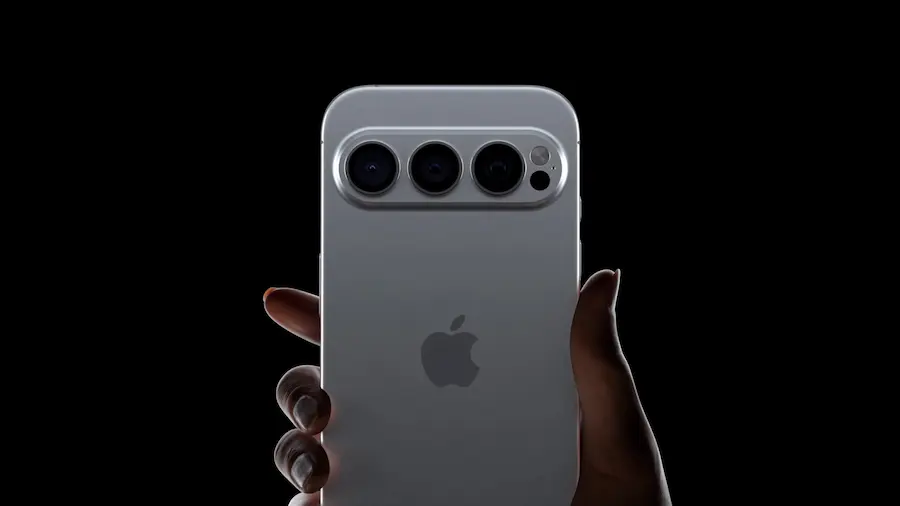
Another component with the feel of a revived prototype would be the return of the so-called Project Bongo, aimed at replacing mechanical buttons with haptic controls built into the frame. The idea would apply to the side button, the volume buttons, the Action button and Camera Control. According to the leaks, these solid-state buttons have already passed tests with gloves, wet hands, extreme temperatures and cases, and would even use an ultra-low-power microprocessor so they can keep working when the phone is switched off or out of battery.
More power, better battery life and a timeline that is still open
Inside, the anniversary models would use the A21 chip, built on a second-generation 2-nanometre process and shared with the second foldable iPhone. Apple is also said to be considering mobile HBM memory, a vertically stacked DRAM connected through silicon vias to increase transmission speed. Its main appeal would be to better feed the GPU and strengthen on-device artificial intelligence performance, an area where every watt and every gigabyte per second are starting to matter more than the usual core count.
The modem would be another strategic change. After the C1 and C1X linked to the iPhone 16e and iPhone Air, and the C2 expected for the iPhone 18 Pro outside the United States, Apple aims to bring its own modem to its high-end models in the United States in 2027. The goal would be to outperform Qualcomm in speed and AI-related features, while also improving energy efficiency to squeeze out more battery life.
The battery is also part of the rumour mill, with pure silicon technology that would offer higher energy density than conventional lithium-ion cells and make it possible to increase capacity without taking up more physical space. One source has mentioned 6,000 mAh, although it is not clear where that figure comes from, so it should be treated as the shakiest detail of the lot. Reverse wireless charging, under-display audio to remove the earpiece slot and a new generation of Ceramic Shield have also been mentioned, but those clues seem less firmly established.
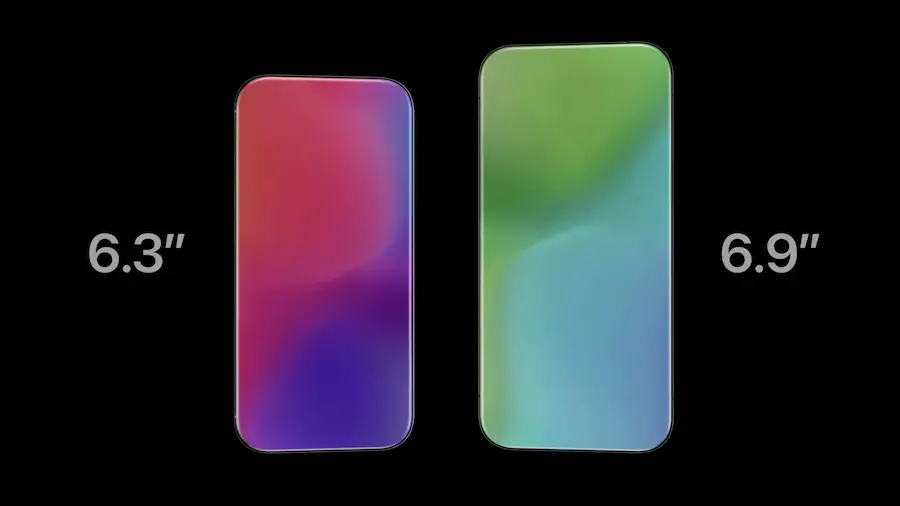
Apple is planning two sizes, approximately 6.3 and 6.9 inches, although the larger model could be sold as a 7-inch device thanks to its thinner bezels and all-screen design. The overall picture is compelling, but not final: the curved panel could arrive in a first phase with some loss of brightness or distortion at the edges, before a more refined version in 2028. If the iPhone X became the template for a decade, this 20th-anniversary iPhone aims to do the same; the question is how many of these pieces will actually be ready in time.


