
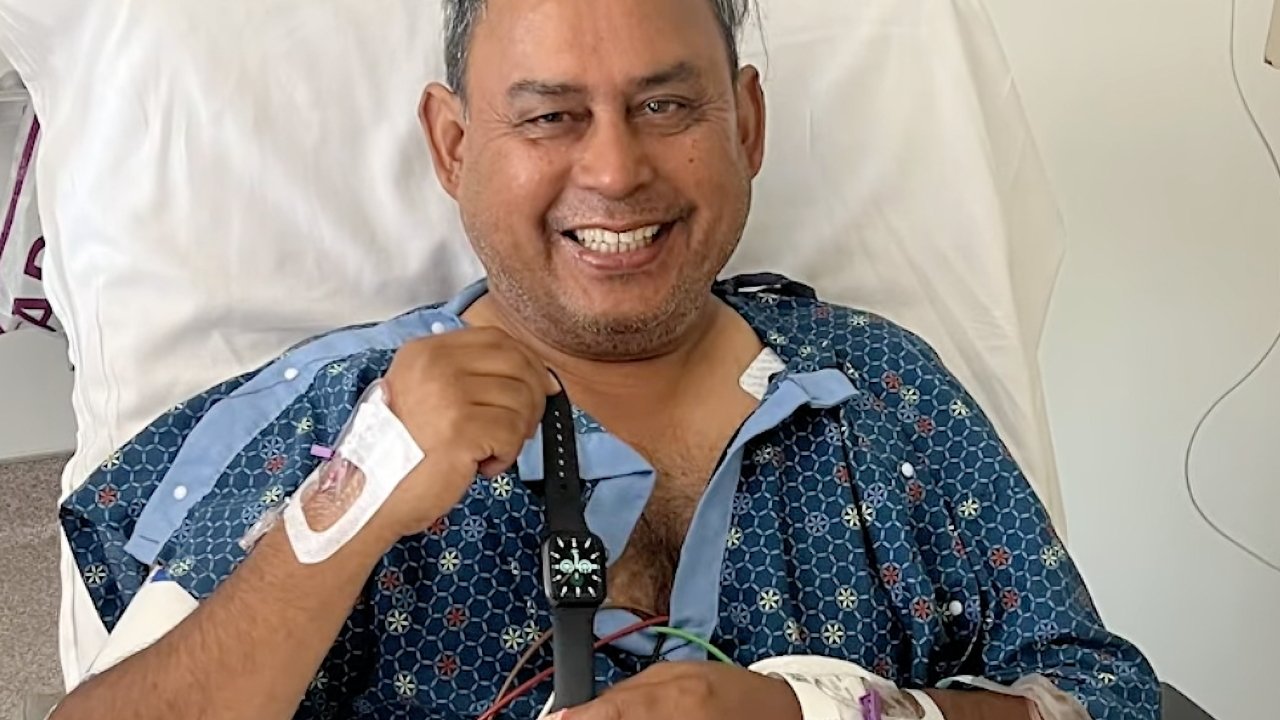

The Apple Watch is once again at the center of one of those stories that explain why smartwatches have moved beyond being simple extensions of a phone to become small guardians on the wrist. Mohammad Islam, a man from Cincinnati, says the fall detection feature on his Apple Watch was decisive in getting emergency services to arrive in time after he collapsed at home. The incident ultimately uncovered a serious medical issue: previously undiagnosed blood clots in his lungs.
The story is compelling because it neatly captures the real value of these health features. This is not about counting steps with a futuristic aesthetic or closing rings as if they were side quests in an RPG, but about a device you wear being able to respond when you are not in a position to do so yourself. And in this case, according to Islam, that response may have made the difference between surviving to tell the story or not.
A collapse at home and an automatic call to 911
Islam was at home taking out the trash when, as he turned around, he suddenly collapsed. He told local television station WKRC that he does not know how long he remained on the floor, until he opened his eyes, found himself sweating heavily and realized he could not get up. He tried to support himself on a nearby chair, but was unable to stand.
The next thing he heard was sirens. The Apple Watch on his wrist had activated fall detection and called 911, the emergency number in the United States. Paramedics took him to the University of Cincinnati Medical Center, where doctors diagnosed blood clots in his lungs. The cause has not been determined, although Islam was discharged with medication.
The relevant detail here is that the user had not consciously configured the feature for that specific scenario. It was enabled automatically because of his age, as he is over 55. That automation, which on an ordinary day may seem like just another layer of software running in the background, ended up becoming the link between a domestic accident and medical assistance.
His daughters’ gift turned out to be more than just a gadget
Islam’s Apple Watch was a gift from his daughters, who had also bought one for their mother. According to him, they insisted every day that he wear it, a fairly familiar scene for anyone who has given useful technology to a relative and then had to act as a kind of emotional tech support. After what happened, Islam summed up his daughters’ reaction simply: they were delighted that the gift had saved him.
Before the incident, he already knew the watch could send fall-related alerts, because he had received the occasional false alarm while working in the garden or after hitting his hand. However, he was not fully aware of how far the system could go when it detected a serious situation. How many features do we keep enabled without thinking much about them until one day they stop being just another setting in a menu?
That is precisely the most technological reading of the case. Fall detection is not a flashy feature like a new display or a faster processor, but it belongs to that category of quiet improvements that gain meaning when the context becomes more serious. In a market obsessed with artificial intelligence and ever more precise sensors, this episode is a reminder that usefulness can also lie in an action as direct as asking for help.
A long-standing feature in Apple’s health strategy
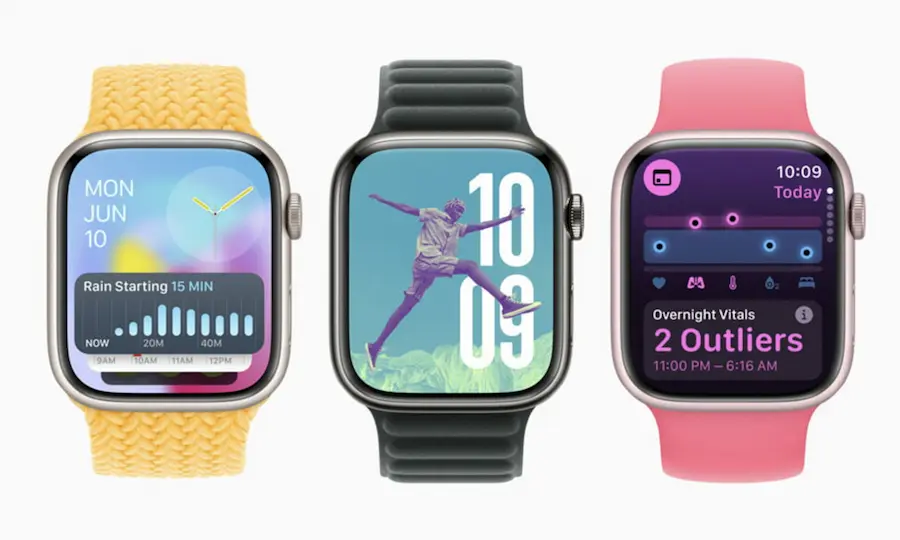
Apple introduced fall detection with the Apple Watch Series 4 in 2018, and since then there have been numerous cases in which this capability has intervened in accidents or risky situations. The original source recalls examples linked to car crashes, alerts sent to family members and rescues of injured people in the mountains. Not every episode has the same outcome or severity, but the pattern repeats itself: the watch detects a physical anomaly and acts when the user may not be able to.
The Cincinnati case is not isolated, not even within the city itself. In 2023, another woman credited the Apple Watch’s heart rate monitor with an alert that helped detect a dangerous condition. Beyond falls, Apple’s watch has warned users about possible issues such as atrial fibrillation, one of those features that does not turn the device into a doctor, but can serve as an early signal that prompts someone to seek medical care.
There is also a less positive side to the picture. Apple and other smartwatch makers are facing a lawsuit related to fall detection over an alleged infringement of UnaliWear patents. That legal front does not change what happened to Islam, but it does show that even the most safety-focused features exist within a competitive industry full of intellectual property and technical disputes, like almost everything else in the sector.
Tim Cook has acknowledged several times that messages from users who say the Apple Watch helped save their lives are among the things he values most from his time leading Apple. In April 2026, he said the first case of this kind had a particular impact on him and that he now receives similar stories every day. It may sound like well-honed corporate storytelling, but cases like Mohammad Islam’s put a concrete face on that health strategy: a father on the floor, daughters who had insisted he wear the watch and an automatic call that arrived at the critical moment.
In the end, the episode leaves a fairly clear conclusion for anyone who already owns a compatible Apple Watch or is thinking of giving one to an older relative: emergency features should not remain buried among settings. They do not replace caution or medical follow-up, but when wearable technology works as a safety net, it stops looking like a geeky indulgence and becomes much closer to an everyday tool with real impact.


