
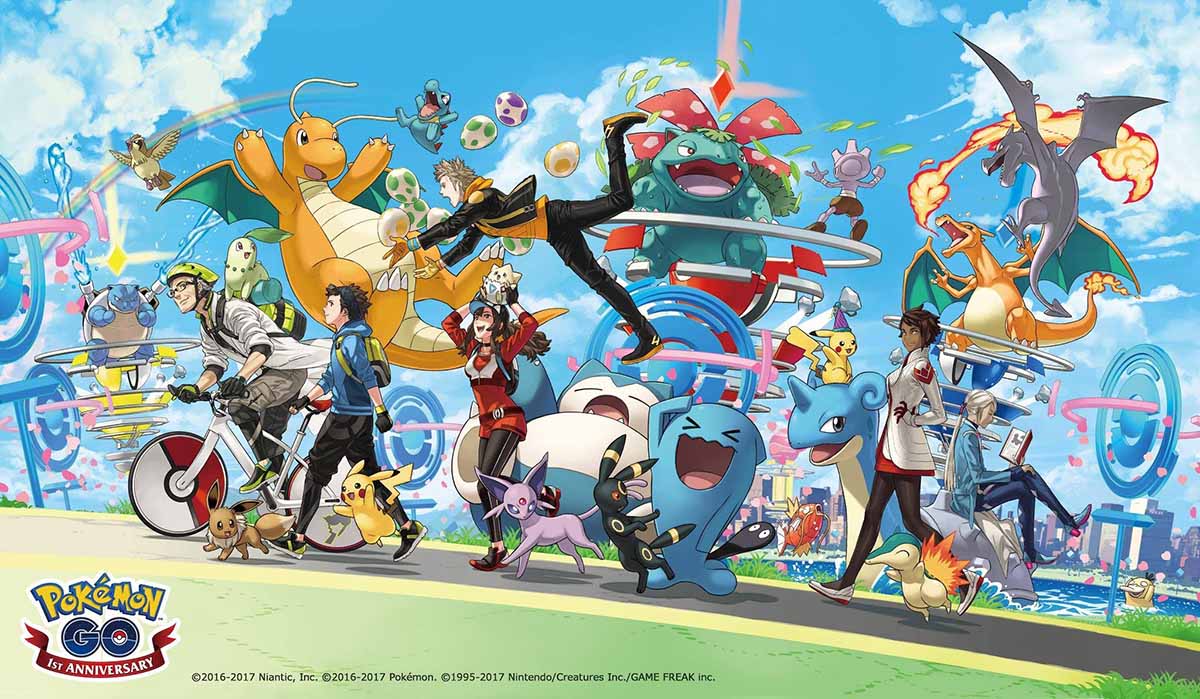

Ten years after that initial frenzy that turned parks, squares and shopping centres into improvised gyms, Pokémon GO remains one of the most unusual phenomena in mobile gaming. The app, launched in 2016 and now under Scopely’s umbrella, has surpassed one billion downloads on iOS and Android, and still brings together millions of players every day. The question many people ask is not so much whether the game is still active, but how it has managed to stay relevant when so many mobile trends disappear faster than a battery at 3%.
The answer lies in a very specific mix: GPS, augmented reality, in-person events and a community that has become almost as important as the Pokémon themselves. What began as the geeky promise of going outside to become a Pokémon Trainer has evolved into a social network disguised as a game, with meetups, trips, friendships and even personal stories that go far beyond catching virtual creatures.
From global craze to daily routine for millions
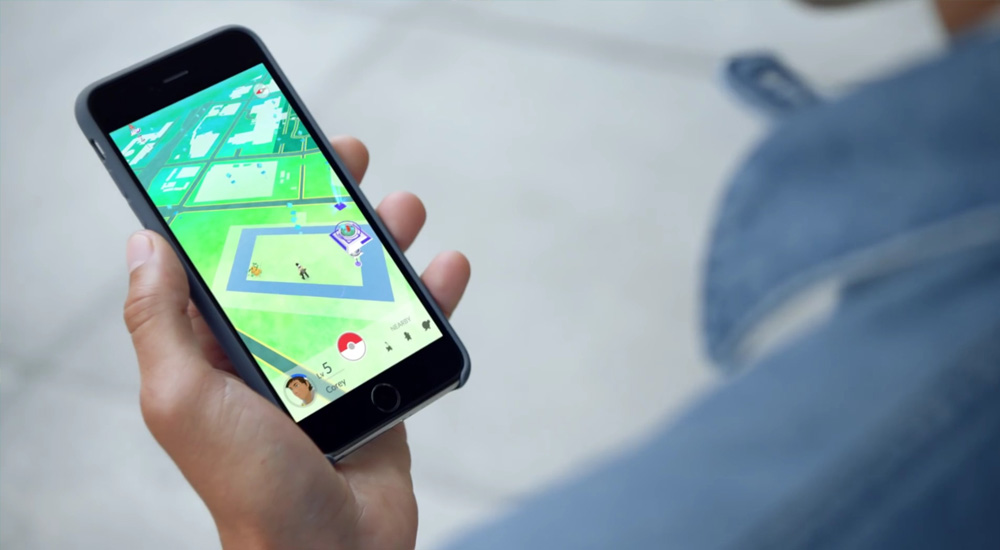
When Pokémon GO arrived on mobile phones, its impact was immediate. The game used the user’s location and the smartphone camera to place digital creatures in real-world settings, so a Pokémon could appear on a pavement, next to a fountain or in the middle of a park. This was not simply another app with a famous licence: it was the Game Boy fantasy moved into your pocket and connected to the physical world.
Matthew Reynolds, editor of the specialist site One More Catch, sums up the key to the phenomenon well: Pokémon GO brought to life the dream of an entire generation that had grown up wanting to be Pokémon Trainers. And it did so with technology anyone could understand, without requiring controllers, consoles or strange configurations. All you had to do was walk, look at the map and let yourself be tempted by that nearby icon promising a new catch.
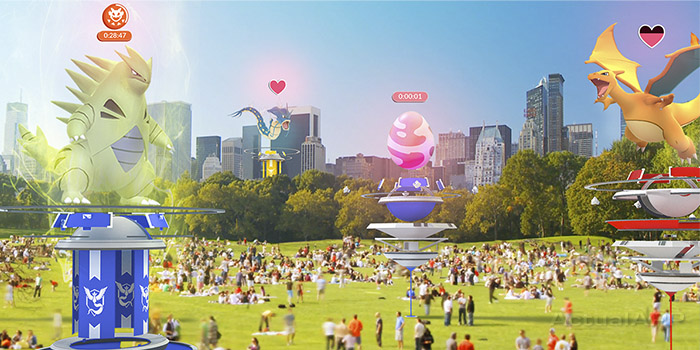
The scale of the game remains striking. Scopely estimates that players have walked more than 100 billion kilometres while playing, a figure roughly equivalent to 334 round trips between Earth and the Sun. It is an almost absurd statistic, but it reflects something important: Pokémon GO has not endured on nostalgia alone, but by turning everyday movement into a playable mechanic.
The community, Pokémon GO’s real engine
The tenth anniversary has left behind a highly symbolic image: hundreds of players gathered in Times Square, New York, to take on a giant Mewtwo, in a kind of living nod to the game’s original trailer. It is no coincidence that Michael Steranka, vice president of product at Scopely, insists that the experience has always started with the community. According to him, the team even receives wedding invitations from couples who met while playing.
That social component explains why major in-person events have become so central. Since the first Go Fest in 2017, Pokémon GO has organised gatherings in more than 60 countries, averaging over 400,000 attendees per year. To someone looking in from the outside, travelling to catch digital creatures may seem excessive; for those who take part, the logic is closer to that of a festival: you could stay at home, yes, but that shared energy cannot be downloaded from the app store.
British content creator j0beats, who runs one of the largest Twitch channels dedicated to the game, describes it in exactly those terms. For her, these gatherings are not just about getting more Pokémon, but about meeting other people and experiencing the atmosphere. Her favourite memory, moreover, is not in a major global capital, but in South Yorkshire, when the Wild Area event came to Doncaster in 2025 as the only European stop of that edition.
Highlights, setbacks and the future after Scopely
As often happens with mass phenomena, the road has not been perfect. In its early years, the huge volume of players caused frequent connection problems, with servers that could not always withstand the pressure. There were also warnings from police and safety groups to prevent users, too focused on the next catch, from getting lost or ending up in dangerous situations. Augmented reality has its magic, but the real world does not pause the game.
The pandemic was another unusual blow. While much of the video game industry grew during lockdowns, Pokémon GO suffered especially because it depended on going out, walking and meeting up. Steranka acknowledges that the initial restrictions affected the game more than almost any other title. However, when measures were eased, the proposition made sense again: many people were looking for reasons to get back outside, and the game already had a structure designed for that.
There are also personal stories that help explain its staying power. Austin, a player from Maine who started in 2017, says that before Pokémon GO he found it very difficult to motivate himself because of anxiety and depression. His first raid meetup changed that relationship with the outside world: walking towards a group of strangers in a park did not make him nervous, but excited. Not every video game can claim to have pushed someone to get out of bed and quiet, even just a little, that inner voice telling them to stay indoors.
The future, even so, comes with reasonable questions. In 2025, Scopely bought Niantic for $3.5 billion, and some fans wondered how the change would affect the direction of the game, especially because Scopely belongs to Saudi Arabia’s Public Investment Fund. Steranka argues that the company will have to prove over time that the deal benefits both the game and its community.
For now, the stated direction remains clear: to strengthen shared memories, family events and experiences that accompany players through different stages of their lives. That may sound ambitious for a mobile app, but Pokémon GO has always worked best when it did not feel like just an app. How many games can say they have filled public squares for a decade, survived their own overloaded servers and still manage to make someone look twice at an ordinary corner in case something unusual appears?


