


Curimomos, or curis, are drawings, comic strips or images of characters from TV shows, anime and video games that are altered to depict absurd situations or make jokes. Their style is often deliberately crude, like a hastily drawn doodle, and understanding them requires context. They are not inherently a form of harassment: the problem arises when they are used to humiliate, insult or target real people with hateful messages.
This is what is causing concern in Spanish schools: anonymous accounts using the names of primary and secondary schools are posting curis about students and teachers, mainly on TikTok but also on Instagram. Some recreate everyday anecdotes; others turn a shared reference into a tool for humiliation.
When a school meme becomes cyberbullying
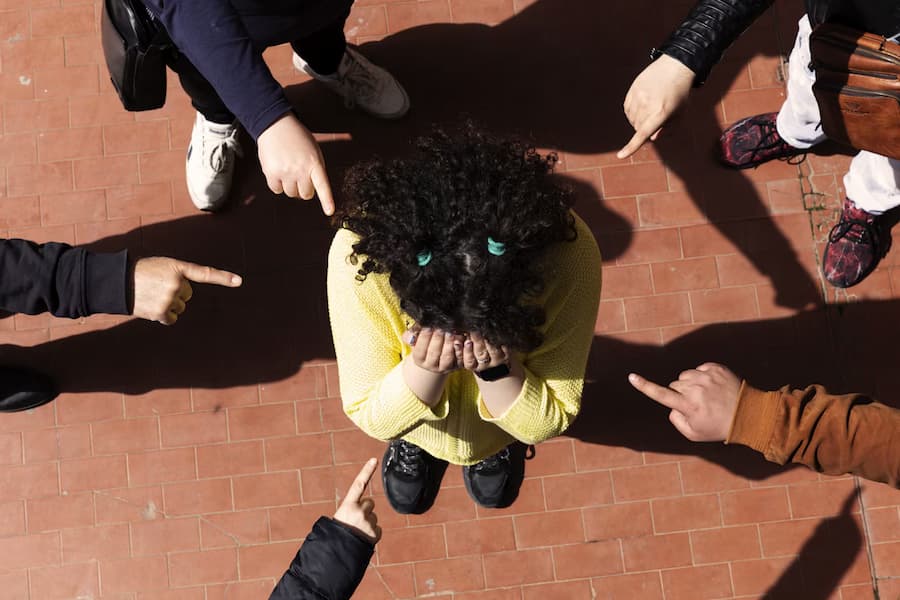
These posts can mock classmates or teachers through references that are obvious to those who share a classroom, even if they make no sense to outsiders. The fact that an outsider cannot identify the victim does not erase the humiliation within the group. This distinction explains why a seemingly harmless image can carry an element of harassment that is difficult to detect without context.
The most serious examples include racist, homophobic and fatphobic messages. The distinction lies not in the quality of the drawing, but in what it says, who it singles out and how the post is used within that community.
Ferran Lalueza, a communications professor and researcher at the Open University of Catalonia (UOC), quoted by La Vanguardia, highlights the combined effect of group participation and amplification by TikTok’s algorithm. An account with few followers can reach enough people to make the victim perceive the attack as overwhelming; the follower count does not set a limit on its reach.
Another factor is the digital footprint, which, according to the expert, can prolong the stigma beyond the original incident. When a post spreads beyond the school community and goes viral, losing its context does not undo the harm, even if many of those who see it do not understand its meaning.
Anonymity, moderation and how schools are responding
The anonymity of those running these accounts adds another challenge, but it should not be confused with an inability to identify them. Lalueza notes that law enforcement agencies have the means to investigate who is behind a profile.
The concern has already reached the police: according to reporting by La Voz del Sur cited by La Vanguardia, a complaint relating to one of these accounts was filed at a National Police station in Málaga on 20 October 2026, prompting an investigation.
Reactions within schools vary. Some teachers and education leaders see these posts as a way of undermining their authority; others accept that they will have to live with humorous content about school life. School gossip accounts offer a precedent: the format may have changed, but putting classmates and teachers in the spotlight did not begin with curimomos.
Platform moderation alone cannot solve the problem either. According to Lalueza, this indirect language allows offensive messages to slip past filters precisely because interpreting them depends on shared references.
The response he proposes combines support, digital education and boundaries: helping teenagers understand what they post and its consequences. When behaviour crosses certain lines and may constitute a criminal offence, the expert believes it should be reported to the authorities.
Where curimomos come from
Reporting by La Vanguardia traces their possible roots to Spanish-language Facebook groups devoted to video games and absurdist humour, with communities such as Seguidores de la Grasa among the examples from that scene. Characters such as SpongeBob SquarePants appeared repeatedly in these parodies, which replaced protagonists or reinterpreted scenes.
They began as visual exercises in humour and satire: crudely drawn characters, digitally traced comics or images taken from the original works, with text and situations that changed their meaning. Simple animations also existed. They are therefore a type of meme built around visual transformation and shared references, rather than a format necessarily designed for harassment.


