
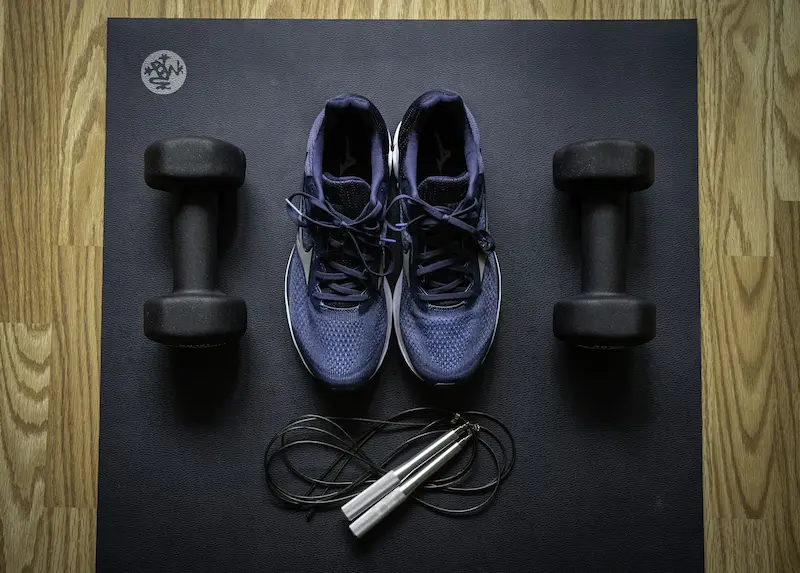

If every January hits and you feel like “resetting,” and the first thing you do is download an app, you’re not alone. New Year’s resolutions have become a digital ritual: trackers, gentle reminders, and progress charts that promise to turn motivation into routine. The problem is that, even with soft notifications, resolutions often come loaded with expectations—and that’s where it helps to recalibrate your approach before choosing a tool.
On TikTok, creator @notwildlin summed it up with an idea that fits especially well in the wellness world: there comes a point when you have to stop being the first person you give up on. His point cuts straight to that urge to throw out “everything before” and start from zero, as if January 1 were a factory-reset button. But as he puts it, you’re not a phoenix—you’re a person, and the foundation you’ve already built isn’t so insignificant that you should blow it up every few months. What if, instead of chasing an epic reboot, you picked an app that helps you sustain what’s already working and improve what’s starting to slip?
With that in mind, these apps stand out for one very specific reason: they don’t just log data—they can help you turn a vague goal into a measurable plan, without falling into the “all or nothing” drama.
When the goal is to move more: Strava and Apple Fitness
For goals tied to cardio, mileage, and consistency, Strava remains one of the most well-rounded options—partly because it blends two worlds that, for better or worse, work: sports tracking and a social-network layer. Logging workouts while staying connected with friends makes activity feel less solitary, and in January that often makes the difference between sticking with it and dropping off.

Where Strava really shines is its mapped tracking and distance counter—extremely useful if your goal is to prep for a 5K, bike to work once a week, or even rack up hundreds of kilometers walking or hiking. It works for other training types like weightlifting or climbing too, but its strong suit is clear: when there’s a route and a pace, it fits like a glove. And if you go premium, you can compare your training week to week, month to month, and year to year—a very direct way to see whether your effort is compounding or whether you’re just “starting over” all the time.
If, instead, you want an app that not only records but also suggests workouts, Apple Fitness is a particularly coherent choice for anyone already living inside the Apple ecosystem. That integration with Apple devices is part of the appeal: the more connected your day-to-day is, the more friction gets removed from working out. And yes, it’s the kind of detail that turns a vague intention into a session completed (even if it’s sometimes hard to admit the missing piece wasn’t motivation, but an interface that doesn’t feel like a chore).
The reference text points to an alternative if you don’t use Apple devices: the Peloton app also offers strong workouts. Either way, what matters here isn’t the brand—it’s the concept: if deciding what to do is the hard part, an app with guided sessions can be more useful than one that only piles up logs.
Habits and strength: Productive and Hevy to measure what matters
Not every goal is measured in kilometers. Sometimes the real change is in small habits, repeated over and over, that don’t look like much—until a quarter goes by and you can feel it. For that kind of objective, Productive shows up as one of the most recommended habit trackers in self-improvement communities, and it makes sense: it lets you track almost any goal, from drinking a set amount of water per day to hitting 10,000 steps.
Its edge isn’t a magic trick, but something simpler and more effective: being able to see progress over time. That cumulative view is both motivating and validating, because it turns seemingly modest daily effort into an upward line you can grasp at a glance. And when March rolls around, looking back and realizing it wasn’t “just another try,” but a sustained streak, is exactly the kind of feedback that makes a goal stop depending on January’s initial enthusiasm.
If your focus is strength and technical improvement in the gym, Hevy sits in the world of weightlifting tracking apps—where other alternatives like Fitbod or Boostcamp are also mentioned. What’s compelling about Hevy is its year-level detail: it tallies how many times you trained, how many PRs (personal records) you hit, and the total reps completed. Read properly, that summary is good for more than bragging rights: it helps you understand whether you’re training consistently, whether your volume is spiking, or whether your progress is tied to short bursts.
It’s also highlighted for having “great watch integration,” a key point for anyone who doesn’t want to pull out their phone mid-set like they’re replying to messages. Some users find the free version is enough, though it’s suggested you might consider paying depending on how many custom workouts you want to use. In other words: start simple, and only add complexity once your routine is stable enough to benefit from it.
Mental wellness: Calm and a shift in perspective
Conversations about wellness goals can get uncomfortable when they focus more on how a body looks than on how it feels—and the original text states this clearly by noting that certain ideals have historically been shaped by white supremacist beauty standards. You don’t need to turn that into an endless debate to take away a practical point: if your goal is tied to feeling better, sleeping better, or turning down mental noise, it makes sense to choose an app that doesn’t push you into constant comparison.
In that scenario, Calm is positioned as a good option when the goal is more about brain health and emotional wellbeing than athletic metrics. Similar apps like Headspace are also mentioned, aimed at starting or strengthening a meditation practice in the new year. The goal here isn’t to rack up “achievements” like a video game, but to build a routine that helps regulate your day—especially once January’s buzz starts to fade.
In the end, your app choice should support the most powerful idea behind this whole approach: stop treating every January like demolition day, and start seeing it as an incremental update. Because yes, technology can nudge, log, and remind—but real change shows up when you don’t abandon yourself after the first ignored notification, the first imperfect day, or the first “I’ll get back to it on Monday.”


