
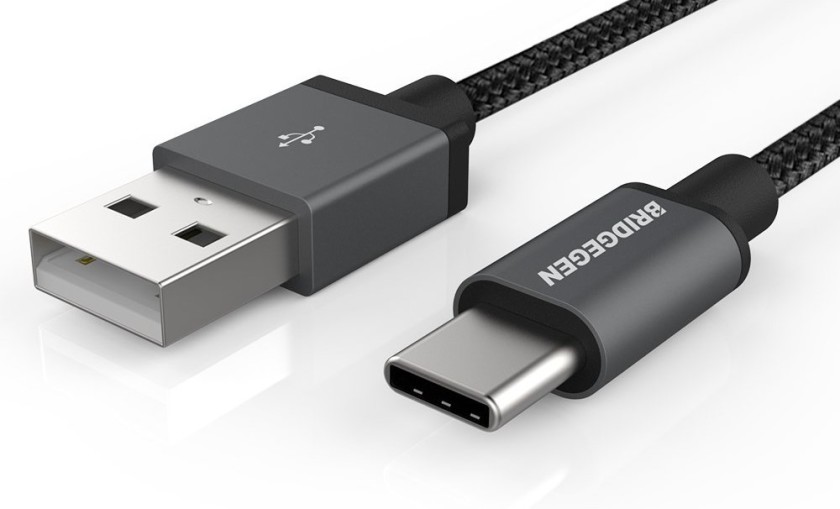

Between phones, headphones, controllers, laptops, and that cable drawer that feels like a relic from another era, working out which chargers are worth keeping—and which are basically past their prime—has become a very common question. The key is to separate three main families: cables, wall chargers, and portable solutions, because not all of them are equally useful today or fit the devices we use now.
If what you want is to know what type of charger you need for a phone, a laptop, or an accessory, the short answer is pretty straightforward: USB-C is the dominant standard, while other older formats survive only on specific devices. From there, the wall charger you use also matters a lot, because a basic USB-A adapter isn’t the same as a USB-C one with Power Delivery—or a GaN model built to charge several devices at once.
The cables that still make sense in 2026
When it comes to cables, USB-C is the benchmark right now. It’s reversible, slim, and found on most modern smartphones, on newer laptops, and across a huge range of consumer electronics—from wireless earbuds to Bluetooth speakers and even 3D printers. In other words, it’s the cable that gets the most out of today’s ecosystem and the least likely to disappear anytime soon.
Alongside it, you’ll still see plenty of USB-A, especially as the end of the cable that plugs into a charger or computer. It’s an older technology and is gradually giving way to USB-C, but it’s still useful as a backup and for older peripherals. You don’t need a museum-worthy collection, but having a couple around can still save the day in plenty of situations.
Lightning is a more specific case. Apple’s 8‑pin connector is still necessary for devices older than the iPhone 15 and for several iPad or MacBook models from past generations, but its future is clearly limited now that the brand has moved to USB-C. If you still use older Apple hardware, it’s worth keeping; if not, it’ll take up space with more nostalgia than usefulness.
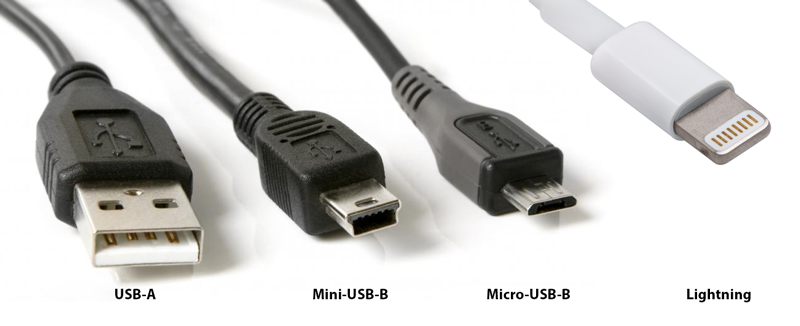
Then there are the legacy formats. Micro-USB still shows up on PS4 controllers, some e-readers, and slightly older headphones or speakers, so it’s not completely out of the game yet. Mini-USB, on the other hand, belongs to an earlier era and only makes sense if you keep very specific devices. Even further back are the 30‑pin Lightning connector, the old iPod cable, Ericsson FastPort, or USB 2.0 Type-B on very old equipment: here, real usefulness drops off sharply and it’s only worth keeping them if you know exactly which device they’re for. Yes, that mystery cable at the bottom of the drawer is probably not about to make its big comeback.
Which wall charger makes sense depending on the device
The power adapter is just as important as the cable. USB-A wall chargers are still the most common and work for older phones, headphones, peripherals, and all kinds of accessories, although their speed lags behind more modern options. Typical output sits between 5 and 18 W—fine for basic use, but far from today’s fast charging.
If we’re talking efficiency and compatibility, the big step up is USB-C PD chargers. PD stands for Power Delivery and refers to a standard designed to deliver more power intelligently—essential for recent smartphones, tablets, and laptops. Depending on the model, they can range from 20 to 240 W, and on compatible devices they can restore up to 50% of the battery in under 30 minutes. Isn’t that exactly what you want when the low-battery alert pops up at the worst possible time?
Even more versatile are GaN chargers, which use gallium nitride instead of traditional silicon. That makes them highly efficient and able to offer fast charging across multiple ports at the same time, typically between 30 and 200 W. They’re especially handy for travel or for desks where a phone, a laptop, and headphones all live together—a scene that’s now as common as having twenty tabs open without wanting to admit it.
There are also 12 V car chargers, designed for the cigarette-lighter socket. They’re still useful if your vehicle includes it, but their relevance is declining in newer cars, where built-in USB-A or USB-C ports are increasingly common. If your car has already ditched that classic connection, keeping one of these adapters doesn’t get you very far.
Power banks, solar charging, and other special chargers
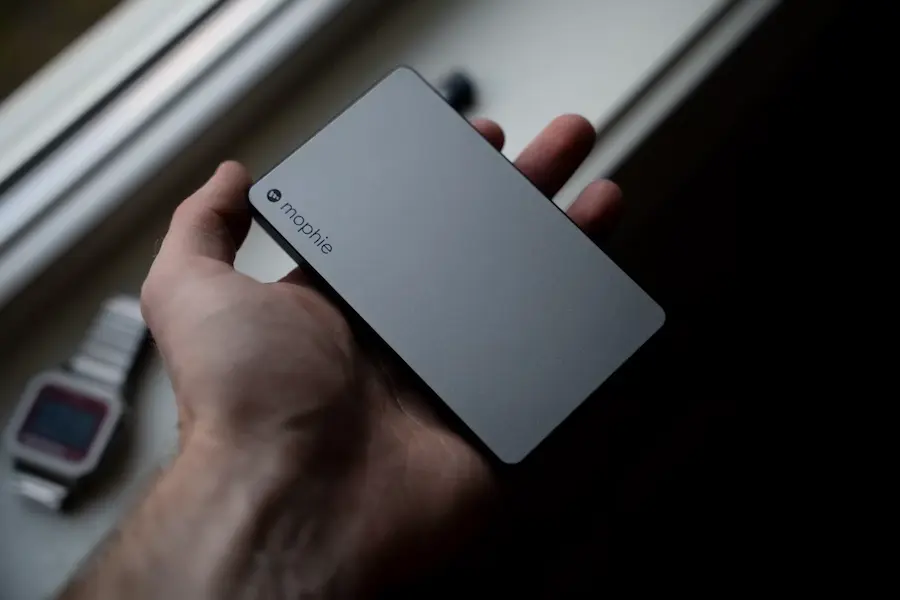
Outside the home outlet, the most practical solutions are power banks. They work as external batteries you charge ahead of time, then use to top up a device multiple times without relying on a wall socket. Their output can range from 10 to 200 W, which makes them a great fit for travel, long commutes, or days away from home.
Solar chargers take that idea one step further. They’re basically power banks with an integrated solar cell, designed for situations where you won’t have access to an outlet for quite a while—hikes, camping, or outdoor getaways. Their quoted power range is more modest, between 10 and 26 W, so the focus is more on independence than on speed.
On a different level are portable generators, aimed mainly at power outages or outdoor use. Besides running larger devices, they often include USB-A and USB-C ports for charging personal electronics, with much higher capacities measured in thousands of watts. They’re not an everyday accessory, but they are a far broader backup solution.
Finally, there are electric vehicle chargers, designed exclusively for EVs. They’re split into three levels: Level 1 uses 120 V and is slower; Level 2, at 240 V, is the typical home option and can fill the battery in roughly 4 to 12 hours depending on the vehicle; and Level 3, also known as DCFC, runs at 400 to 1,000 V and can reach 80% in just a few minutes. This obviously isn’t about charging a phone—it’s a different league where infrastructure matters as much as the car itself.
If you had to sum up today’s landscape in a single idea, it would be this: it’s worth keeping USB-C, any Micro-USB you still genuinely use, basic USB-A chargers, USB-C PD adapters, GaN models, and power banks; everything else only makes sense if you still rely on very specific older hardware. The rest is more tech archaeology than a real need.


