
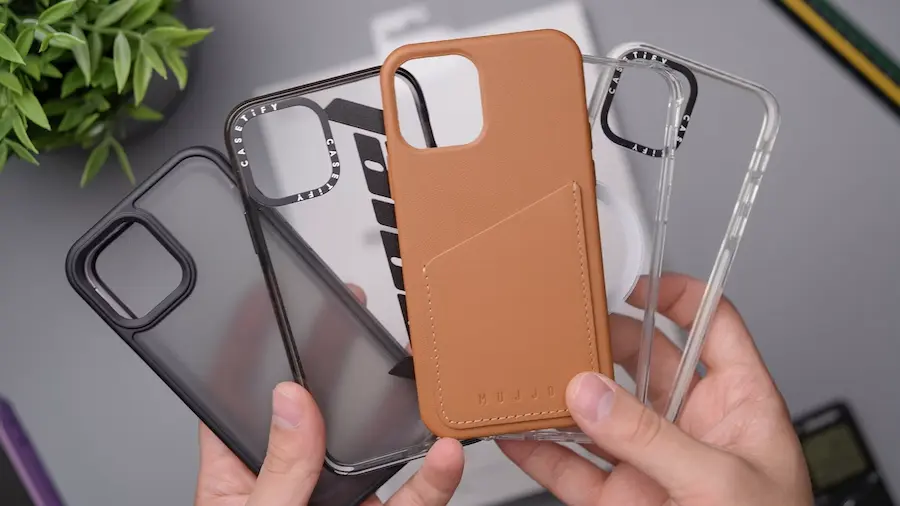

To choose a good protective phone case, it is worth paying less attention to slogans and more to four factors: how it has been tested, what materials it uses, how securely it fits the phone and what compromises it introduces in everyday use. A bulky case does not prove by itself that it offers better protection, just as the phrase “military grade” does not let you compare models without knowing how they were tested.
The right choice also depends on your routine: carrying your phone in your pocket is not the same as using it on a construction site. The goal is to find useful protection, not to turn every phone into a small tank.
Drop tests: data matters more than the label
The first thing to check is the technical sheet: look for the number of drops, height, surface and impact orientations. Without those details, a promise of durability is difficult to assess, no matter how impressive the figure printed on the box may look.
OtterBox links many references to “military grade” to the US MIL-STD 810G standard, while Android Central describes a test involving 26 drops from approximately 1.22 metres onto plywood placed on a concrete base with a steel backing. That does not confirm that every case using that phrase has passed exactly the same tests or identical approval criteria.
Multipliers also need to be read carefully: OtterBox advertises models that withstand several times the number of drops required by the standard, but multiplying the number of drops does not mean multiplying the height. In addition, these are manufacturer-declared figures; the available information does not provide independent verification of those claims.
What is the use of watching a phone survive a spectacular fall if we do not know what happens when it is repeated? The tests by MobileReviews Eh! offer a more comparable approach, with more than 30 drops per case and measurements of deceleration, rotation and other variables, rather than simply checking whether the device still works.
Before buying, distinguish between a marketing claim and an external evaluation with a published methodology. The latter makes it easier to interpret the results, although it still does not guarantee that your next drop will reproduce the test conditions: your floor at home does not always run the same benchmark.
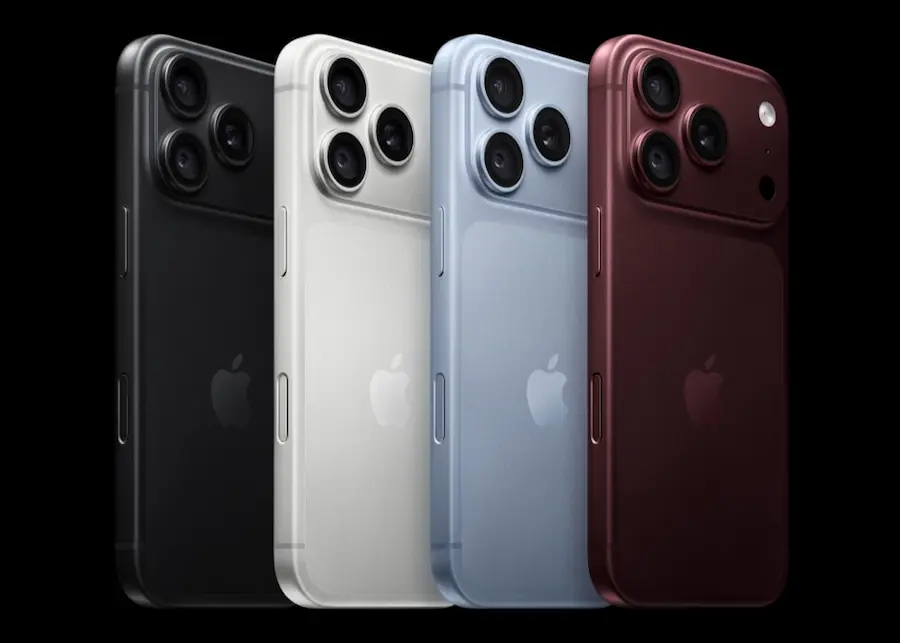
Materials, raised edges and fit: where protection is decided
Words such as “reinforced” or “shockproof” say little unless they are backed up by a specific construction. The Spigen Tough Armor is a useful example: it combines a polycarbonate back, a TPU frame and impact foam placed in the corners. Identifying those components and knowing their thicknesses provides a far more useful basis for comparison than an adjective.
Its results also show that a case can perform well in one type of impact and worse in another. In the MobileReviews Eh! tests, it scored 7% better than the group average in corner impacts, but recorded an initial force 5% higher when dropped face down. That is why it is worth reviewing several orientations rather than focusing on the most favourable figure.
The raised edge around the cameras also had a measurable effect on that model: it reduced the initial impact by 10% and the total force by 23% compared with the average of the cases tested in drops onto the camera module. It is worth looking for raised lips around both the camera and the screen, without automatically applying those percentages to any similar-looking design.
The fit deserves a separate check. In a second-storey fall described by Android Central, a Pixel 8 kept working with a Poetic Revolution case, but the case came off. The episode does not prove a systematic flaw, but it is a reminder that cushioning impact and staying attached are two different problems.
Check the exact model and generation, the fit around the camera module and compatibility with your screen protector; a generic description such as “for iPhone” does not resolve those differences.
Choose according to your use, without forgetting weight and accessories
For everyday use, mainly indoors or when carrying the phone in a bag or pocket, the source presents a slim case with declared tests from around 1.22 metres as a sufficient option. Bulkier protection makes sense when conditions are more demanding, not simply because its appearance suggests toughness.
That extra reinforcement has everyday costs: the Tough Armor analysed weighs 58 grams. Before deciding, check the added weight, dimensions, grip and how easy it is to press the buttons. Port covers also matter, especially if they force you to open a flap every time you plug in the charger.
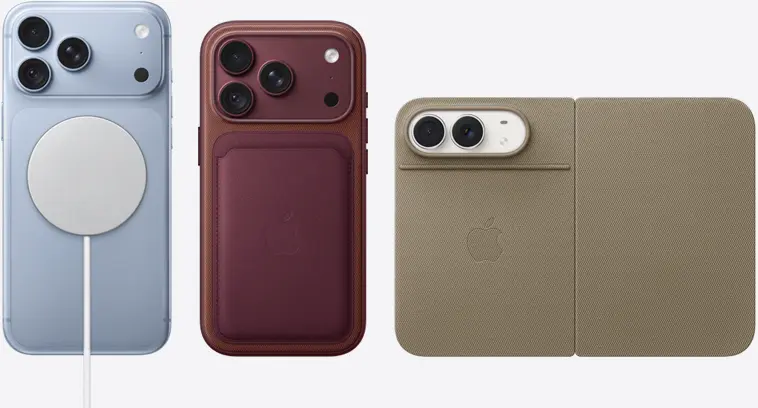
If you use magnetic mounts or chargers, look for explicit MagSafe compatibility and, where available, measurements of holding strength. Two cases advertised as magnetic do not necessarily hold equally well; also check whether they affect wireless charging alignment or whether noticeable heat appears during use.
For dusty or wet environments, check the specific IP rating and the protection conditions, including whether all covers need to be closed. As a reference, OtterBox advertises its Frē series for immersion of up to two metres for one hour, a manufacturer claim that should be read together with its conditions.
Finally, if you are especially worried about breaking the screen, add a screen protector: a case and a protector cover different parts of the problem. If the test method, materials or exact fit are missing, keep comparing; a transparent spec sheet is more useful than a forceful promise.


