
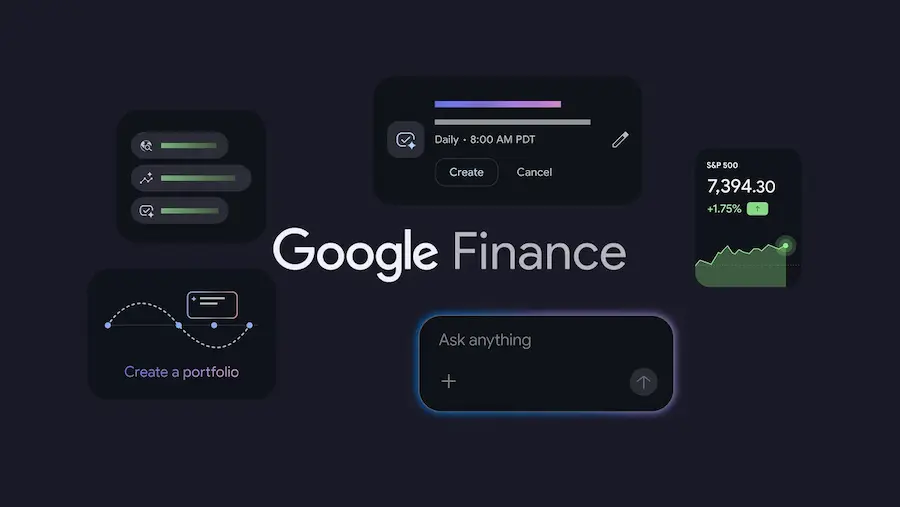

Google has refreshed Google Finance with a fairly clear goal: making it easier to track investments and understand what’s happening in the market from a single platform. The update moves the service’s new experience out of beta, brings more capable portfolios, adds scheduled summaries with personalized information, and introduces a dedicated Android app. For anyone who’s only used the tool occasionally, the leap is significant; for those who check the markets several times a day, it changes the landscape quite a bit.
The main shift is that Google Finance no longer just shows quotes and news—it’s starting to behave more like a personal financial tracking hub. And that’s the key question for many users: what you can do now, how investments are organized, and what the new app offers compared with the web version. All of this is also backed by AI-powered analysis features—because in 2026, it seems no product can escape that familiar silicon ritual.
As the company explained in its official announcement, these changes are now beginning to roll out globally, with some features available starting today on the web and on mobile. The original source is available at The Keyword, Google’s official blog.
More useful portfolios and analysis tailored to your investments
The most important part of this update is the new Google Finance portfolios. Starting this week, they’re rolling out globally within the service’s new experience, bringing a user’s investments together in a single dashboard where you can view performance and get insights into asset allocation, among other data. This isn’t just a facelift: Google wants portfolios to stop being a static list and become a more interpretive view.
What’s more, anyone who already used previous portfolios in Google Finance will see them carried over automatically, while new users can create one from scratch by uploading files like CSV or PDF, adding screenshots, or even describing their investments in natural language. That detail significantly reduces the initial friction and fits neatly with the broader trend of turning previously dry processes into much more accessible flows.
Once the portfolio is set up, the research tool comes into play, letting you ask specific questions about the investment mix. Google gives examples such as spotting underrepresented sectors or analyzing how fixed income affects long-term growth. It’s an interesting shift, because it moves the focus from raw data to interpretation—where many people tend to get stuck when the spreadsheet starts to feel like a final boss.
Scheduled summaries and alerts with made-to-measure information
The other big addition is a system of scheduled updates within Google Finance. Instead of manually checking charts, watchlists, or news, users can ask the service to prepare recurring reports on the topics they care about. Google suggests, for example, requesting a daily summary before the market opens with analysis of notable moves in cryptocurrencies—though the concept goes far beyond that specific use case.
The instructions for these tasks can be edited, as can their frequency, and you can also lean on your watchlist or portfolio to receive information that better matches your own situation. Google Finance then works in the background and delivers the briefing at the chosen time. In essence, it’s an automation layer designed to spare you that ritual of opening twenty tabs every morning—something any reader with dashboard syndrome will recognize immediately.
When the summary is ready, a notification arrives via the Google app on Android or iOS. It also appears in Google Finance’s research panel on the web, where you can review and modify active tasks. This feature is already available globally, so it’s not a future promise or a keynote-polished demo.
The new Google Finance app for Android is here
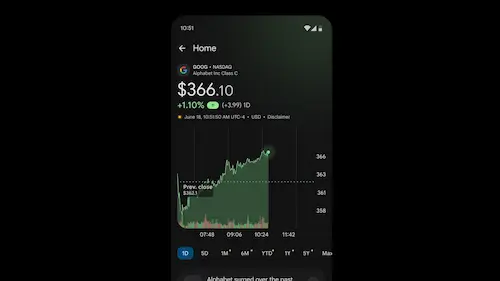
Alongside the web service refresh, Google has launched a new Google Finance app for Android. The app brings the core elements of the current experience to mobile: quick access to your watchlist, real-time data, a live financial news feed, the AI research tool, and the so-called key moments, which explain why a stock has moved.
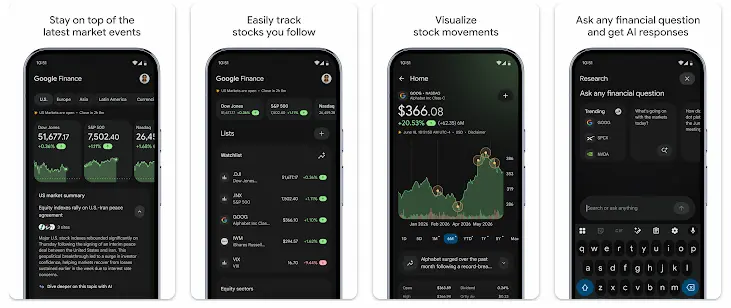
That focus makes it clear who the app is for: users who check the markets several times a day and prefer a dedicated app rather than relying on a browser or scattered integrations. For now, it doesn’t include everything the revamped web version offers, but Google has already said it will bring more features to the app over the coming months, including live earnings calls as well as the new portfolio and task tools.
As for the mobile ecosystem, the rollout starts with Android and later this year an iOS version will arrive. It’s a logical move, though it also shows that the initial weight of this new phase of Google Finance sits in Google’s own home turf. For a quick takeaway, it’s simple: Google Finance is now better for tracking investments, automating summaries, and checking the markets on mobile with a dedicated app—exactly the missing piece that kept it feeling like a secondary feature in the broader Google universe.


